Jacobite Correspondence
The Jacobite correspondence presents a different analytical issue from the Melville and Hamilton papers. Melville’s archive survived because he was Secretary of State; Hamilton’s because he was a duke whose family preserved their papers across centuries. The letters in this dataset survived for a different set of reasons: interception by Williamite officials, preservation in sympathetic private family collections, and accidental survival in archives whose owners outlasted the immediate political crisis. The network we can reconstruct from these sources is therefore not a complete picture of Jacobite communication. It is the portion of that network that the Williamite state managed to see, plus whatever fragments survived in the papers of families who remained discreetly sympathetic to the Stuart cause. Reading it requires thinking about two contexts simultaneously: what the network shows, and what the conditions of its survival tell us about what it cannot show.
The Collections
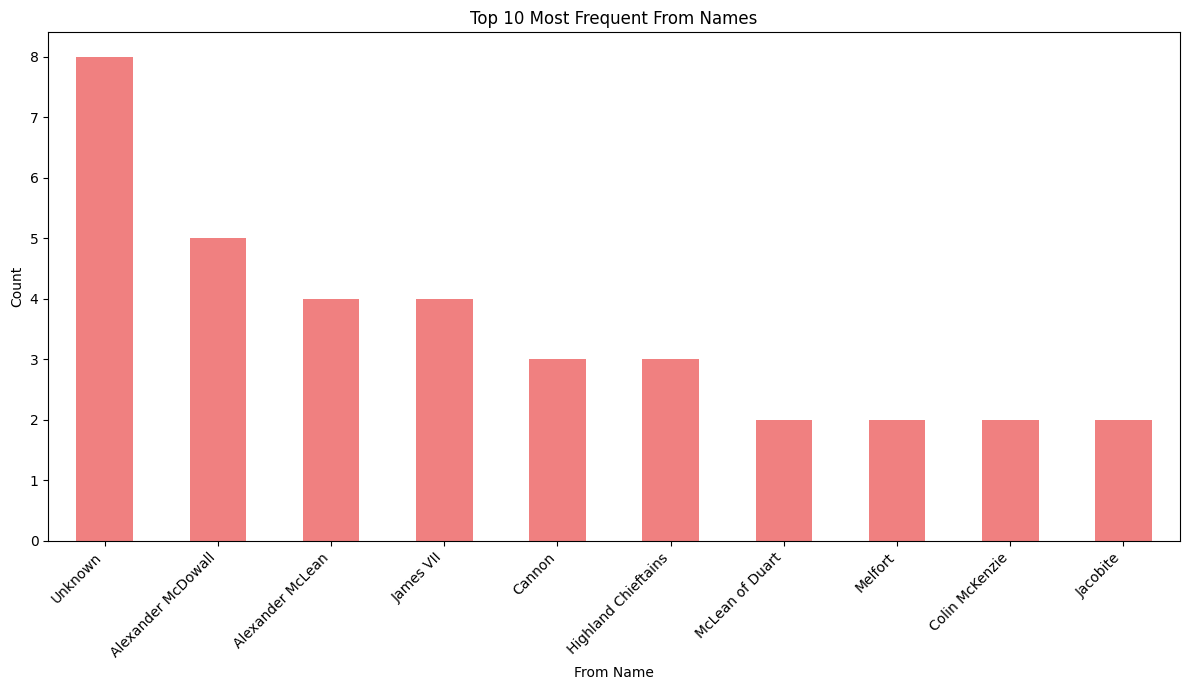
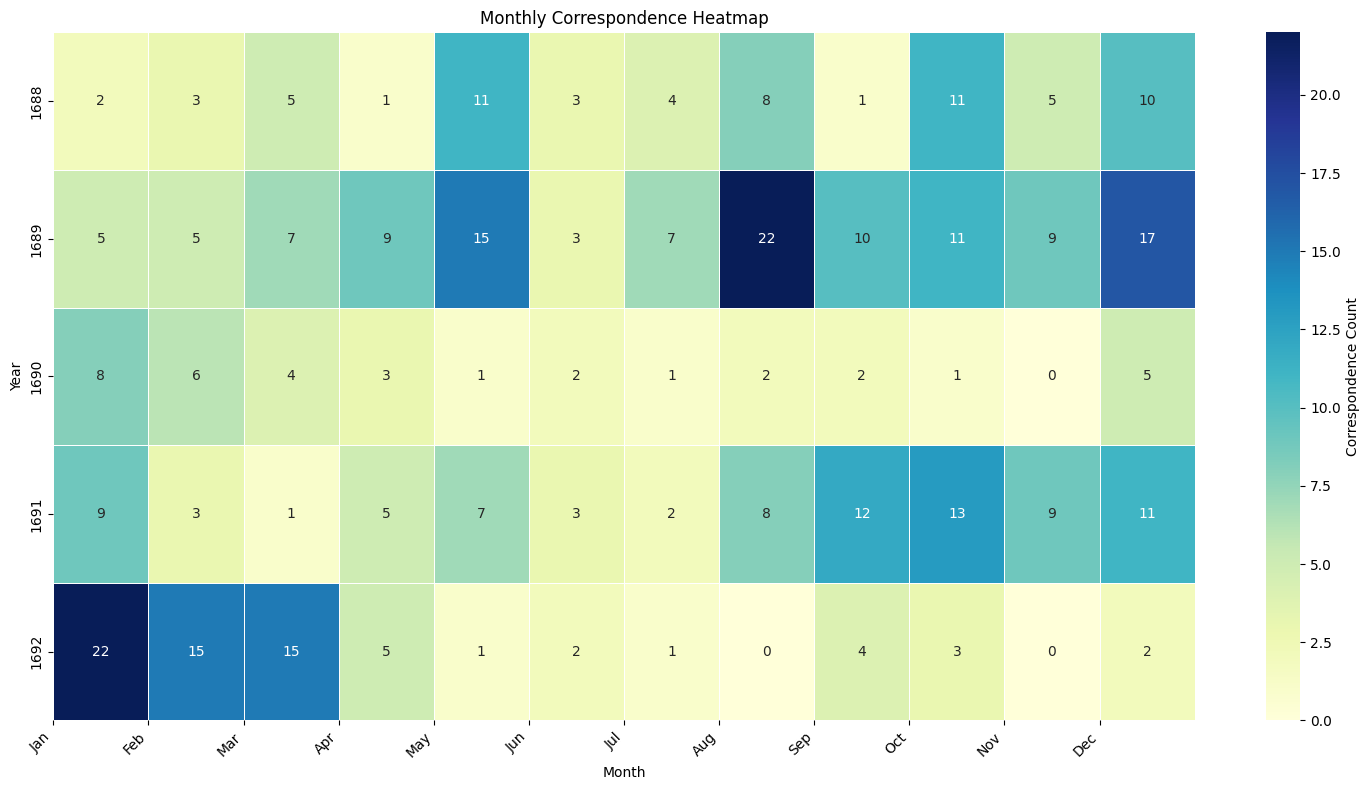
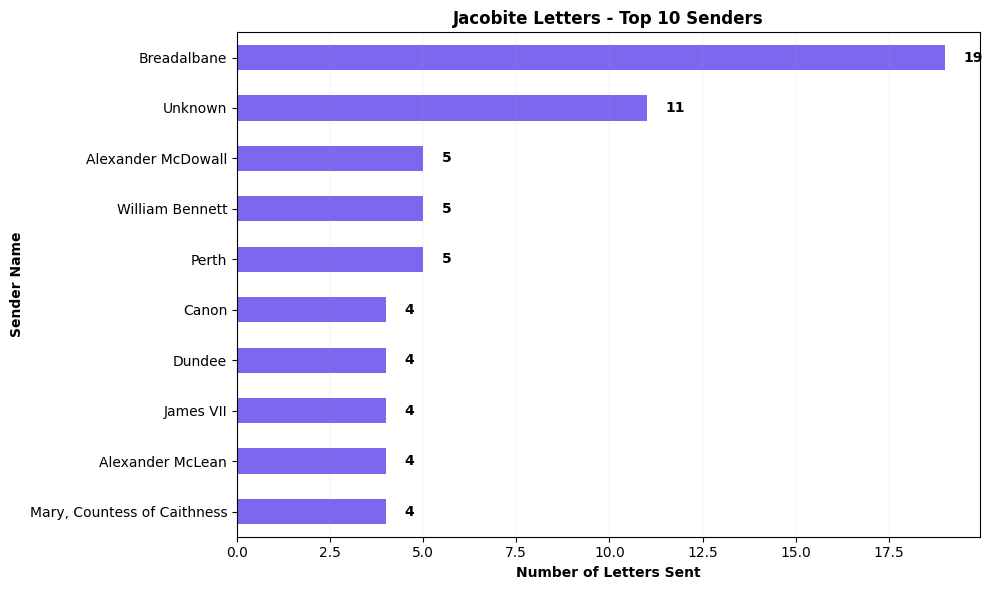
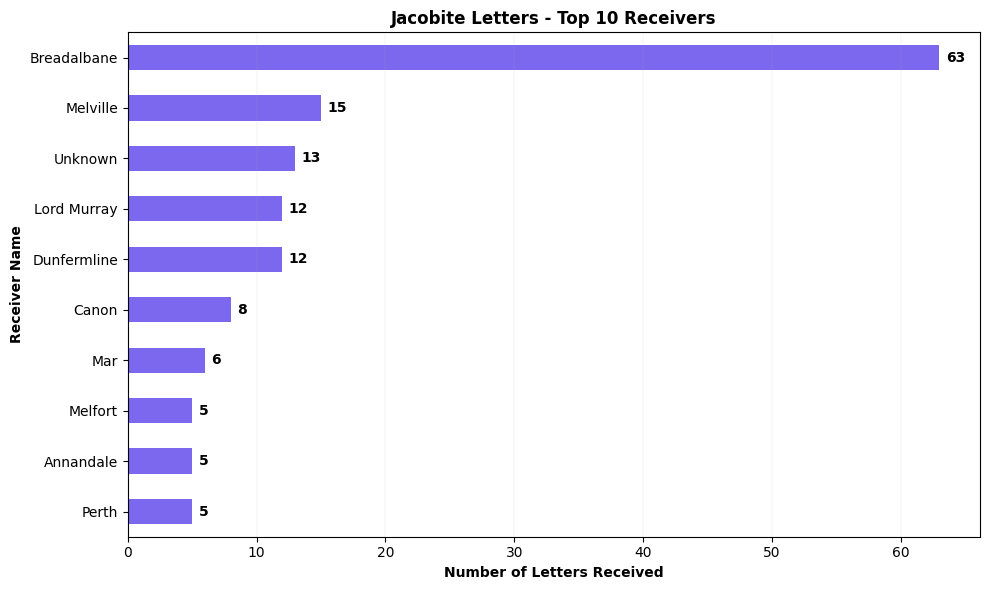
Of the extant Jacobite letters, 120 are named specficially in the National Records of Scotland's collections, these are contained within the Leven and Melville papers (GD26). The letters are primarily in English and French, a number of the letters are unsigned or unaddressed which one would assume was for anonymity purposes or they were passed between spies or couriers without addresses. Other letters exist in various archives, printed, and private collections. The collections included in this graph are the Atholl Papers, Kellie and Mar Papers, Annandale Correspondence, Breadalbane Correspondence, the Dunmore Papers, Mackintosh Family Papers, Montgomerie Family of Eglinton, Families of Moray of Abercairny, Drummond of Blair Drummond, Home of Kames, and Stirling of Ardoch, Papers of the Ogilvy family of Inverquharity, the Drummond Family, and some other extant collections hosted by the Scottish National Records. Each of these collections represents a different social position relative to the Jacobite cause: some families were committed Jacobites, some were ambiguously sympathetic, some ended up on the Williamite side while maintaining connections to the other. The Breadalbane Papers, for instance, represent a family whose head negotiated the Glencoe settlement and the Highland pacification while maintaining back-channel Jacobite contacts. The Atholl Papers represent a family divided between Jacobite and Williamite allegiances within a single generation. Reading the collections together rather than separately allows for a network analysis that crosses factional lines. The 120 letters specifically named in the NRS collections within the Leven and Melville papers (GD26) are particularly significant: they are Jacobite correspondence that ended up in a Williamite archive. They are there because they were intercepted. Their presence in GD26 rather than in any of the twelve Jacobite family collections is itself a data point — evidence of the Williamite surveillance operation that ran alongside the administrative correspondence we see in the Melville page.
Jacobite Correspondence Network
1688–1692 · Scotland & Ireland · Drag to pan · Scroll to zoom
Node Type
Controls
What Does the Graph Tell Us?
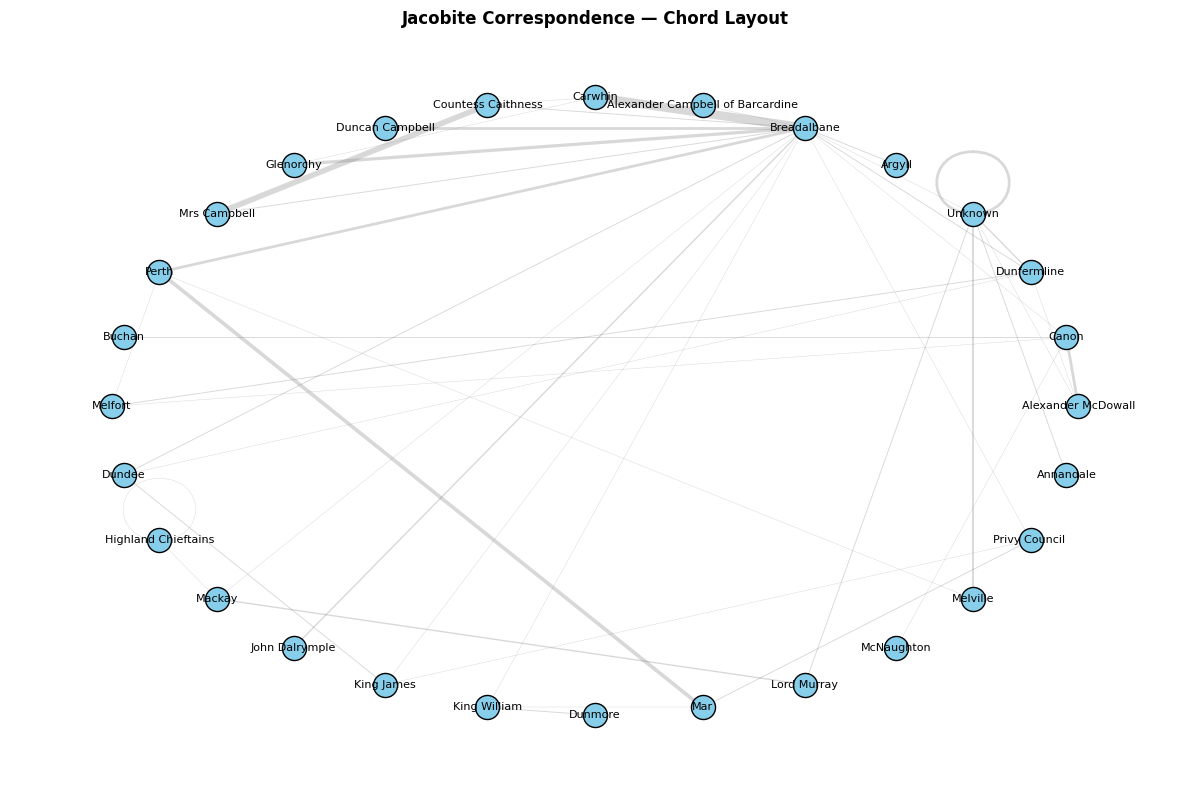
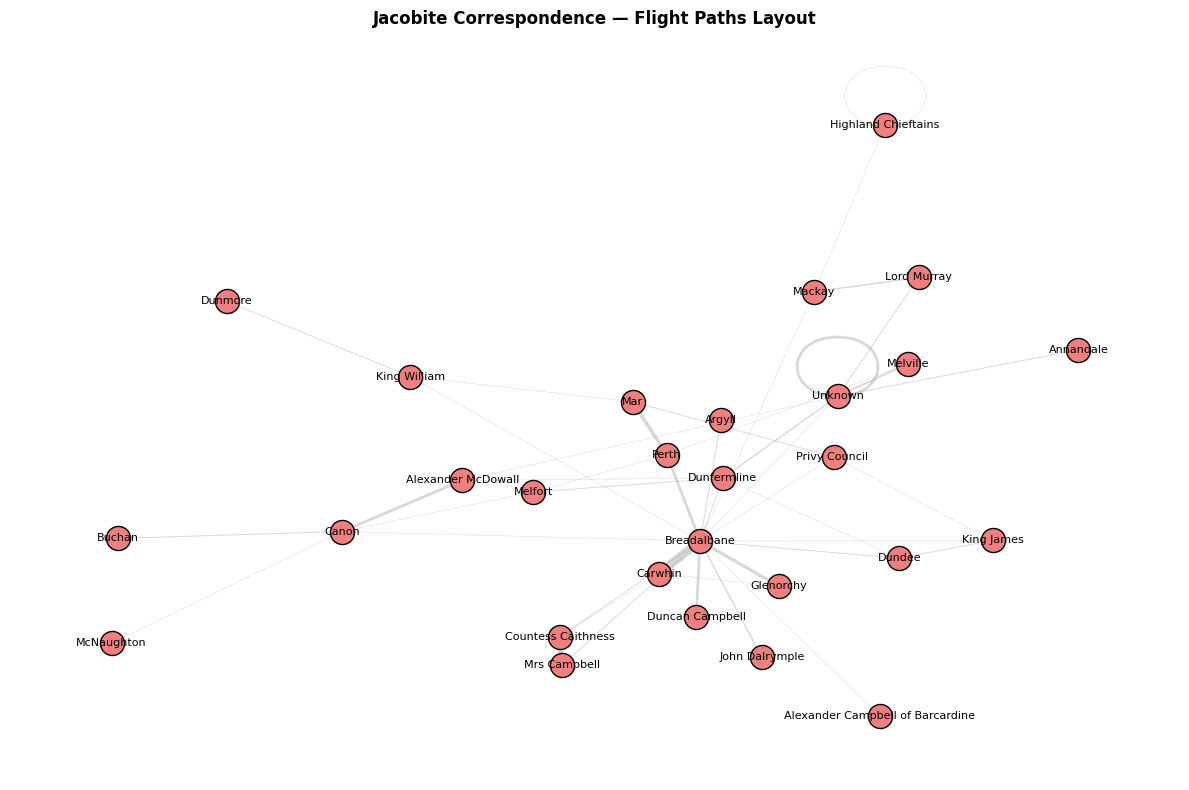
The network graph for the Jacobite correspondence classifies nodes into three-degree tiers — high, mid, and low — rather than displaying raw centrality scores as the Hamilton and Melville graphs do. This was a concious choice because the correspondence is scattered across twelve collections and significant gaps in survival, precise centrality scores would imply a false precision. What the graph's visual structure immediately shows is that the Jacobite network was significantly less centralized than either the Melville or Hamilton networks. There is no single overwhelming hub equivalent to Melville's dominance in his own corpus. Instead the high-degree nodes are distributed across several figures, which reflects something real about how clandestine networks operated: deliberate decentralization was a security feature. A network with a single hub is vulnerable, if you intercept the hub and you have the network whereas a network with multiple roughly equivalent nodes is harder to penetrate. Whether the Jacobite network's decentralization was a deliberate security or simply an artifact of survival is an important question to consider. The significant proportion of low-degree nodes, correspondents with only one or two connections in the dataset, is also important. In the Melville corpus low-degree nodes are peripheral figures who wrote to the Secretary once and disappear. In the Jacobite corpus they represent something different: couriers, cut-outs, or one-time intermediaries whose function was precisely to appear disconnected, carrying a single message between nodes that otherwise had no visible link. The prevalence of unsigned and unaddressed letters shows that many actors in this network were actively working to minimize their visible presence in it.
Visuals